Wednesday, June 07, 2006

A Conversation on Christian Social Ethics

OK, I promised something worth reading. Below is an e-mail exchange among several of my colleagues on the social justice committee of National Capital Presbytery. This is as good a brief exchange on key concerns of Christian social ethics as you're likely to find in just a few brief e-mails. The primary voices are the Rev. John Wimberly of Western Presbyterian Church, and the Rev. Jeff Krehbiel of Church of the Pilgrims. The Rev. Roger Gench of New York Avenue puts in his two-cents and the final note (so far) is from Gayraud Wilmore. All of them are stalwart progressives and thoughtful leaders. It's a bit long, but worth it. Enjoy.

Dear All: I apologize for not being able to stay yesterday for the rest of our meeting. I was looking forward to the discussion about WIN. As Jeff and I have discussed, I have serious questions about WIN's strategy. While their accomplishments are significant and worthy, I have great difficulty with the idea that all the mayoral candidates come to hear demands from the church then move on to hear demands from labor unions then move on to hear demands from neighborhood associations then move on to hear demands from the business community, etc. The candidates make promises to each group, oftentimes conflicting promises. In this process, the church becomes one more interest group in a plethora of interest groups in this city. But the church isn't an interest group per se. We have a much broader agenda than any interest group.

In yesterday's District section of the Post, their was an article about WIN in which the reporter expressed reservations about WIN's style, saying it was certainly not "pastoral." The reporter wrote the text below in reference to Martin Trimble, WIN's lead organizer:

Trimble, who is trying to put together a similar group in Northern Virginia, tells potential acolytes to go to Union Station and study the quote inscribed on the statue of A. Philip Randolph , the late labor leader who helped organize the 1963 March on Washington.

"At the banquet table of life, there are no reserved seats. You get what you can take and keep what you can hold," it says. "If you can't take anything, you won't get anything. And if you can't hold anything, you won't keep anything. And you can't take anything without organization."

Trimble said the nonprofit group is "not Pollyannaish about the promises made Monday night. What all those candidates were thinking is: 'I don't want anyone talking negatively about me on their doorstep.' But I don't care what the promises are. You have to hold them accountable. And you have to have the power to do that."

While I absolutely adore A. Philip Randolph as a labor organizer, he is one of my heroes, his is a model for unions, not churches. I really wonder how WIN can harmonize the philosophy in this quote with the way Jesus went about organizing or how Dr. King and the civil rights movement went about making significant political gains. Dr. King spoke about love not power or, more accurately, the power of love. Preaching love not power, he gained more power than any politician of his time. I prefer the model of Dr. King to WIN's Alinsky model. Thanks for considering my thoughts. john


John: I think you seriously misread the Civil Rights Movement, and King in particular. King, who was acutely aware of the dynamics of power, said famously,

"Power...is the ability to achieve purpose. It is the strength required to bring about social, political or economic changes. In this sense power is not only desirable but necessary in order to implement the demands of love and justice. One of the greatest problems of history is that the concepts of love and power are usually contrasted as polar opposites. Love is identified with a resignation of power and power with a denial of love... What is needed is a realisation that power without love is reckless and abusive and that love without power is sentimental and anemic. Power at its best is love implementing the demands of justice. Justice at its best is love correcting everything that stands against love."

So when Sojourners lobby's at the Capitol for the budget, they aren't concerned with power? They aren't interested in rallying citizens who will vote for candidates that support their agenda? When you joined other clergy to press the mayor on DC General, there was no implied threat if he ignored you? Please. Of course there was. The mayor didn't meet with you because you had good ideas. He met with you because you represented a constituency that had the capacity to punish him. (And by his calculation, the determined that your constituency was not sufficiently organized to worry about, which is why, in part, he ignored you.)

Moreover, WIN's agenda is not "narrow." We developed our "agenda" over years of patient organizing in every city in the neighborhood, through thousands of one on one meetings and house meetings and strategy sessions. And I believe our platform on May 22 captured the soul of the city and the best pastoral concerns of the church. There was nothing narrow about it. Too bad you weren't there, but the post covered it well (see links below). In the Post article you referenced, Martin was responding to activist critics who accuse WIN of being naive, that the politicians just made to us a bunch of empty promises. We intend to continue our organizing to ensure that those promises are fulfilled.

See http://www.washingtonpost.com/wp-dyn/content/article/2006/05/24/AR2006052402730.html?referrer=emailarticle
As for Jesus and Alinsky: see Walter Wink’s piece.

-- Jeff

Jeff: Thanks for the thoughtful response. I didn't say Dr. King denounced power. He said that Christian effectiveness flows from focusing on love, not by focusing on power itself. For me, the key in the quote you cite from Dr. King is the line "power is not only desirable but necessary in order to implement the demands of love and justice." It is love that is generally missing from the language of Alinsky-based organizing and strikingly missing from Martin's articulation of the WIN vision. When I went to the first big organizing meeting at Metropolitan way back when, I heard a consistent message: We will win over our opponents with power. Dr. King never, ever would have said that. One pick out a few lines of a speech here or there that sound like he was focused on power. But anyone who was around then or has read extensively about his life knows that power was not his focus. It is why even his enemies came to respected him. He said that we win over opponents with love and the power of God. Obviously, he organized people into a powerful movement. But the organizing principle was love, love and more love. The focus on power rather than love is why I dropped out of WIN then. It is why I continue to question its methodology today.

As for my protests against the closing of D.C. General, you write, "When you joined other clergy to press the mayor on DC General, there was no implied threat if he ignored you? Please." In fact, there was no threat, implied or stated. That isn't the way I operate. I don't think it is consistent with the Gospel. I feel my responsibility is to speak truth (as I understand it) to power, not seize or accumulate power. If the principalities and powers listen, I am happy. If they don't, I intensify my efforts to gain their ear. If that doesn't work, I know the history of powers that don't listen to the truth---they disintegrate and disappear. And, of course, their is the infinitely remote chance that I am wrong!

The accomplishments of WIN are significant. However, the methodology is flawed, in my opinion, and leads the church into a role in society that has led to the church being diminished and discredited whenever it happens. Whenever we become perceived as a political interest group to whom the principalities and powers bow, the separation of religion and state is damaged. And when that happens, both religion and state are damaged. john

First, let's be clear about one thing. WIN is not the church. It is a citizen's organization organized through institutions, primarily but not exclusively churches. It is not the church's only voice, it does not pretend to be. It is certainly not my only voice, nor Pilgrim's only voice, and it does not prevent me, or the church, or any of our members from being involved in any number of ways in the world.

Back to your comments: To make no threat, implied or otherwise, may have been on your mind when you met with the mayor, but not with those who met with you. The accompanying newspaper articles make that clear enough. And it was not what King did in his organizing. To simply "speak the truth" with no concern for the effect or consequence is to be indifferent to justice, which is what King's quote points to. King did not want to just speak about love or justice, he wanted it enacted, which requires power. It makes no difference to you that DC General closed? Well, it makes a lot of
difference to a lot of other folks. So which would be better, to say, "Let's work to keep DC General open, by organizing effectively so that the political leaders of the city hear our voice," or, "What we're going to say won't really make a difference, and we aren't concerned with outcomes, just in speaking the truth."

I would contend that those actions were all about power, just poorly executed. And when you go with your church to your City Councilman and he promises to build a shelter for the homeless, and then he doesn't, but votes to give some big tax cut to the Corcoran Gallery instead, there should be no consequence for that? You would not encourage your members to vote for a candidate with other priorities? (The vote, as King's biographer Taylor Branch notes, being the most important tool of nonviolent social change. Branch, by the way, has been involved with WIN's sister organization in the IAF in Baltimore, BUILD.)

Did you not participate in the South African divestment campaign? Withdrawing financial support was not a coercive use of power in the cause of justice? Of course it was. It was an effort to punish the South African government, and to punish corporations that did business with them.

One of the reasons I got involved in organizing with the IAF was out of frustration with clergy who were content to simply "speak the truth" without doing any of the hard work for justice. So we would light a candle at Rodney Square in downtown Wilmington against the death penalty, but do nothing to actually get the death penalty changed. But boy, did we speak about truth and love! I'm sure the people on death row were impressed.

To say WIN or the IAF, or Alinsky for that matter, is ONLY concerned about power is to distort our actions. Alinsky talked, and the IAF talk, a lot about power because they want to help people get things done, and have constantly to help good church people understanding that love and truth without power will never achieve justice. So yes, we talk about power. But to say that we ONLY focus on power is just false, and I don't know how you could sit through a WIN action and come to that conclusion. The moral voice of the churches in WIN lack no shortage of focus on love or justice. That has been abundantly clear in everything WIN has worked on to date. (And Alinsky too. He started organizing in Back of the Yard, then in Woodlawn, Buffalo, Rochester, always among the poor and disenfranchised. If he had been interested in power for power's sake, he would have worked someplace else. He was interested in power for those with no place at the table-- as the Randolph quote points to.)

-- Jeff

Lest we continue to clog up everyone's inbox, maybe we should just agree that we disagree: profoundly, respectfully. John

I am hesitant to join this discussion because I have not been attending these meetings, but the discussion between Jeff and John is key to Christian Social witness and ministry. So for whatever its worth, here are my two cents. The gospels do, in fact, talk about Jesus in terms of power. In Mark, when folk say of Jesus "what is this -- a new teaching with authority." "Authority" here can be translated "power." It is also said of Jesus in the gospel that he did works of "power." Power is a perfectly legitimate understanding of the gospel in the world -- note Reinhold Niebuhr's translation of love into justice which is the balance of power. Indeed, Niebuhr's social ethic would be vacuous without "power" that is in dialectical tension with the love. The two -- power and love -- are not antithetical, but must be held in tension. I have worked with the IAF for over 15 years now, and the IAF organizations I have participated in are very conversant with Niebuhr's understanding of love and justice. I don't know what "justice" would mean without power, just as justice without love is brittle. Much thanks to Jeff and John for engaging this discussion.

Roger Gench

Since one or two of you seem to be actually reading these, I'll go one more round. (It's my day off. Keeps me for having to work on the lawn.)

I guess I'm still not entirely sure, John, what the issue really is here. In the old PCUS there as a doctrine that the church should not be involved at all in civic affairs (which allowed the church to ignore Jim Crow for 100 years). Is it just the rhetoric? You can exercise power, just not talk about it? Not acknowledge it? Not teach about it? Not be strategic in its use? While this does not make your argument wrong, I will say, that in all my years of organizing, the only colleagues who have ever raised issue with the IAF's talk of power have been white male clergy. I have yet to have an African American or female colleague raise such concerns. That does not mean your concerns have no merit, but it does raise the question if at least some of this arises from discomfort on the part of some with their own relative position of power and privilege.

You concede that King did not denounce power, but that seems to be what you are doing. When you attended the WIN event back in '98, you were disturbed when Joe Daniels said, "we are organizing for power." But of course, that wasn't all that was said. Many things were said that night about WIN's purposes, things about love and justice, things which I imagine you support. In addition to those things, it was also said, "We are organizing for power," something you allege neither King nor Jesus ever would have said. I won't speak for Jesus, but I disagree about King. The quote about power I referenced earlier says exactly that.

WIN has never said, as you well know, that we are organizing ONLY for power (that would be absurd). We have said that, in the pursuit of justice, working in the most disenfranchised areas of our city, we are intentionally and strategically organizing for power. That is, unlike myriad previous efforts (whose numbers are legion) that have organized with similar aims and lofty goals but have quickly petered out or fallen short of their goals, we intend WIN to be effective over the long haul, and we are not so naive as to believe that we will be effective just because we have love and truth on our side. We will also need power, power in the real world.

The IAF teaches that in the world of politics, power has two sources: organized people and organized money. We don't have much organized money (though we have some, which WIN has used for good purpose, as have our sister organizations in the IAF, which collectively have built over 5,000 units of low income housing, in part by organizing millions of dollars of church money to provide 0% construction loan financing). We do have the capacity to organize people, consistently and over time, which is WIN's source of power. When we sit down across from the mayor, or members of city council, or leaders of the Federal City Council, they don't listen to us because we have good ideas (though we do have good ideas, just not good ideas alone), but because we have numbers. This is what the IAF teaches. We organize relationally, building relationships one by one over time based on common self-interest. We don't have power because we attract high profile celebrities, or because we contribute large sums of cash to campaigns. We have power because of organized people. It's as simple as that. And in the process we teach our people how to use that power to accomplish our aims.

So, yes, is a city-- in a world-- in which ordinary citizens-- especially poor citizens, are shown everyday who has power-- the corporations, political leaders, the wealthy-- the IAF says to its members, "You also have power, but to use it you have to work for it, organize for it, and use it strategically." The IAF teaches that we organize in the "world as it is" on behalf of "the world as it should be." In the world as it should be, the concerns of the poor would be central, and ordinary citizens would have the same voice as the chair of the Federal City Council. In the world as it is, that is not the case. WIN understand that, and teaches it.

While the IAF organizes differently than the Civil Rights Movement, on this I see no difference. When King called for clergy to join the march to Selma, it was because he understood strength in numbers (power.) Of course he also believed that the marchers had truth and righteousness (and dare we say God) on their side. But the more marchers the better! Not because more marchers made their cause any more "true," but because more marchers made their march more powerful. The March on Washington was nothing if not a show of power. Every march has an implied threat! (Kennedy certainly understood that.) And, again, when you joined other clergy at the Mayor's office to press about DC General, you also understood there was strength in numbers. That's why the organizers called you and asked you to join them. They wanted as many people there as possible, as many clergy as possible (not because you are more righteous, but because you are presumed to represent a constituency), and I imagine they were especially keen to have you there as a White clergyperson not from Ward 8, to demonstrate that this was not just an east-of-the-Anacostia concern (that is, they were strategic). You think the mayor would have met with you had you come alone? Not a chance. (He would have if you were the Cardinal. He also understands power.) And if you believe there was really no implied threat in showing up in numbers, you are either being disingenuous or naive. The mayor certainly understood the implied threat. You may not like the coarseness of Martin's language about "punishing" those who ignore WIN's demands, but I imagine you might share, from time to time, such stories in your sermons about political leaders who ignore the concerns of the poor and cater only to the interests of the rich, and I also imagine that your congregants might pay attention to such stories, and perhaps even vote for someone else the next time around. Their vote is also punishment, whether you call it that or not. (Which is what voters did in the last election, when they turned Harold Brazil, Kevin Chavous and Sandy Allen out of office to "punish" them for ignoring their concerns, especially on the baseball stadium.)

I write so passionately about this because when the 800 members of WIN gathered at Asbury United Methodist Church on May 22, from such diverse constituency as St. Albans Episcopal Church in Ward 3 to Anacostia Bible Church in Ward 8, in common cause around an agenda to invest $1 billion dollars in neglected neighborhoods, build and preserve 10,000 units of affordable housing (including not only low income housing but transitional housing for homeless families), and create a $350 million fund for youth services, it was for me a glimpse of what the Kingdom may be like. I don't know of any organization in the city that has achieved anything like that. And we were able to do so because we are also willing to talk, teach, and organize around power.

-- Jeff

Again, I'd like to have this debate in person. But two quick points:

1) If you don't think there is widespread and deep opposition to/questioning of WIN's tactics in the African American community, we live in different cities.

2) A quote with which I will begin our debate when it resumes:

"The church must be reminded that it is not the master or servant of the state, but rather the conscience of the state. It must be the guide and the critic of the state, not the tool of the state." Dr. King Strength to Love

john

John, I sort of regret that I've not been able to participate in the on-line discussion of the issues raised by your exchange with Jeff. I thought that my hospitalization and rehab experience was over for the present (thanks to the many well-wishes and prayers of friends and family members), but I learned just today that I've got to go back in for another spell of tests and procedures having to do with a recurring heart disease. So I'm not going to try to put more than my two-cents in at this stage of the game.

I really think that your idea of two short working papers that could be distributed at Presbytery and discussed at various times and places would be a modest but reasonable way of encouraging brothers and sisters to share in unpacking and solving old but always timely problems in Christian social ethics. But it's also possible, unfortunately, to get so excessively bogged down searching for an infallible verbal solution for problems like the love/power conundrum that urgent action on some pressing issue at the end of our noses gets passed over out of sheer exhaustion. That's a disease especially known to afflict highly educated and verbose Presbyterians. I hope our social justice committee will learn to always be wary of it.

I remember that the debate between African American Christian activists and the Maulana Karenga-wing of the Black Power movement on the west coast covered much of the waterfront on agape and dunamis. And most of the people involved never went to seminary! That discussion was most vehement (if not always enlightening) between 1967 and 1969 and, if anybody is interested, it can be revisited in the opening pages of the first volume of "Black Theology: A Documentary History," edited by Cone and Wilmore and published by Orbis in 1993. It may be helpful to the current discussion to see how the issues were framed in the Black community between the followers of Martin and Malcolm, between the religious mugs and the secular thugs, during the waning years of the church-led civil rights movement.

In any case, there is doubtless some benefit in re-opening the debate. Only the issues are so madly contextual and existential that the argument really needs to be joined by real live combatants on the actual field of battle--that is to say, in the historical moment--than hypothetically around mahogany tables in nicely appointed church parlors. But I don't mean to be flippant. It really does involve matters of life and death and too few of us seem ready to die.

Gay Wilmore

Tuesday, June 06, 2006

Watering Weeds

Been a while since I posted. I've been watering weeds.
Actually, literally so for that past 20 minutes or so. We have a lovely little patch of flowers and ground-covering plants on a steep bank. We planted them for a patch of beauty -- and to avoid mowing grass on the bank.
For the past week almost all of my spare time has been spent in replacing a broken storm door. It's been a classic home improvement chore. In removing the old one I discovered that the root cause of the problem was that the decking outside had risen too high. In removing the decking I discovered the root cause of its rise and so on and so forth. So the new door remains in a box and two trips to the Depot later the new deck floor is almost installed as are the new steps that became an unplanned side benefit of the task.
The good news is that the weather has been nice.
The bad news is that the weather has been nice -- too nice. No rain. Plants need watering. Hm, garden needs weeding. No time. Oh, well. Let's water the weeds.
Much of life is like that. The logical order is not always, or even often, the possible order. So we do what we must when we can. Meanwhile, we water weeds.
I hope the coming days have a bit more time for posting, because I have some really good stuff to put up here. Keep checking back. Unless the weeds take over completely I should have time to get back here pretty soon.

Tuesday, May 30, 2006

Another day, another agitation


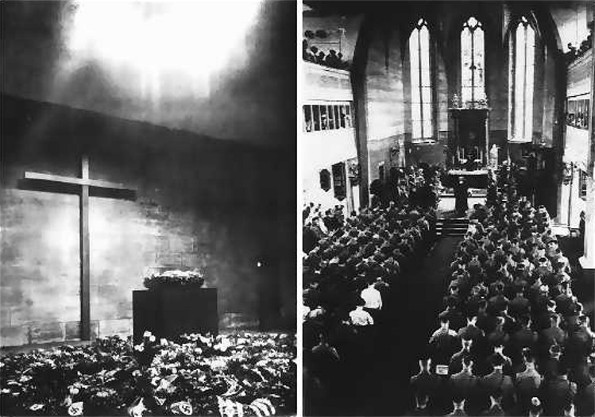
In case you weren't depressed, this should do the trick: Christian nationalism. I'm not suggesting that "the Nazis are coming, the Nazis are coming." Still, it's worth remembering that Hitler acted "mit Gott." The picture of Nazi trinkets at the foot of the cross is haunting. American civil society remains strong enough that a slide into fascism is neither imminent nor inevitable. On the other hand, the part of the church that is not cheerleading the rightward drift of the nation is incredibly weak and adrift. Powerful voices of faith speaking out for equity, justice and peace -- and against the scapegoating of immigrants, gays, and Muslims -- are more important now than ever. Pass it on.

Monday, May 29, 2006

Memorial Day

In between painting the front porch and heading to the Depot to prepare for more holiday fun I paused for a moment's reflection on this day. As is often the case, James Carrol has given powerful expression to the necessary distinction between soldiers and the wars they fight. Memorial Day is as good a time as any to think about the narratives that frame the war and opposition to it. Honor, duty and courage are the dominant themes of the story we are told by those in power leading this war. There are other themes and other stories -- stories of nonviolence, of justice, of peacemaking. We must tell them again and again and again until we are sick of telling them for only then might they be heard above the martial drumbeat of war.

Saturday, May 27, 2006

More on NSP

Here's another reflection on last week's Network of Spiritual Progressives conference.

Friday, May 26, 2006

Tooting My Own Horn

About a month back, The Nation ran an excellent piece on the state of progressive faith. I wrote them this letter, an edited version of which will apparently run in this week’s print edition. It is important to write these things to publications, to Congress, to each other. And hey, every once in a while one will get noticed.

Thank you for Dan Wakefield's challenging "Taking Back the Faith." I'm sorry that Wakefield didn't visit with more people of faith in his travels because he might have found that there are communities and faith leaders walking the same path that Coffin, King, Heschel and the Berrigan brothers trod. On Easter Sunday, reflecting on the empty tomb and the missing body, I said to the congregation I serve in Arlington, "The Jesus who came preaching good news to the poor, release to the captives, recovery of sight to the blind, liberation to the oppressed and the year of jubilee (Lk. 4:18-19) has been stolen by Christians who don’t seem to care much about public policies to help the poor, the imprisoned or the sick, who preach a hate-filled message to gays, lesbians, bisexual and transgendered persons, and who embrace a gospel of prosperity for the affluent and but remain indifferent to the impoverished and indebted of the developing world. This Jesus has been stolen by those who call you a saint when you feed the hungry but call you a communist when you ask why people are hungry. This Jesus has been stolen by those who call you a good Christian when you pray for the safety of the troops in Iraq but call you un-American when you question the wisdom of the war. This Jesus has been stolen by those who call you pastor when you do a wedding for a man and a woman but call you a false prophet when you suggest extending the same rights to same-sex couples." I am not laying any personal claim to the mantle of the great leaders of the Civil Rights and peace movements of the past century, but the people we have been waiting for are among us already. The challenge lies in organizing effectively, raising voices repeatedly and getting the media -- including The Nation -- to focus on what is being said and done today rather than on what was said so eloquently four decades ago. Come and see.

Tuesday, May 23, 2006

If We Build It ...

The Network of Spiritual Progressives conference ended Saturday evening and my middle-aged bones are only now recovering from too many long, late, spirit-filled evenings in a row. The conference drew about 1,200 people and considerable media attention as well as progressive commentary. It drew from me the conviction that now is the time to build a network of spiritual progressives in Northern Virginia. Read up. If you're interested, let's connect on it.

Wednesday, May 17, 2006

Away Message

I'm at the DC conference of the Network of Spiritual Progressives this week and away from the computer. No more entries till next week. In the meanwhile, check out the network. Read The Left Hand of God. Get spiritual. Be progressive. TTFN.

Tuesday, May 16, 2006

Another Day, Another Agitation

John Kenneth Galbraith, who died last month, once said "The emancipation of belief is the most formidable of the tasks of reform, the one on which all else depends."
Sounds like a call to rethink, to get a new mind for a new time.
On the other hand, William Sloan Coffin, who died days before Galbraith, was fond of saying that "you don't think your way into a new way of living; you live your way into a new way of thinking."
And then there was Funkadelic, who sang "free your mind and your ass will follow."
Head first or not, we need some liberation these days from lousy belief systems and unjust actions.

Thursday, May 11, 2006

Agitation #3

Abraham Lincoln once asked, "How many legs does a dog have if you call the tail a leg?"
The answer: "Four; calling a tail a leg doesn't make it a leg."
For some reason that came to mind today as President Bush assured the nation that the National Security Agency does not spy on Americans. This on the same day that USA Today writes about a massive database of Americans' phone calls. Hm ... how many legs does that dog have?
You shall know the truth, and the truth shall set you free. Or is it, rather, the truth is out there?

Wednesday, May 10, 2006

Agitation #2

“Justice is not an ancient custom, a human convention, a value, but a transcendent demand, freighted with divine concern. It is not only a relationship between man and man, it is an act involving God, a divine need. Justice is His line, righteousness His plummet (Isa. 28:17). It is not one of His ways, but in all His ways. Its validity is not only universal, but also eternal, independent of will and experience.”

– Rabbi Abraham Joshua Heschel
Now that wouldn't have anything to do with this would it?

How Much Would You Save
Under the Plan?

Income, in 2005 dollars
Average tax saving
$10,000-20,000
$2
$20,000-30,000
9
$30,000-40,000
16
$40,000-50,000
46
$50,000-75,000
110
$75,000-100,000
403
$100,000-200,000
1,388
$200,000-500,000
4,499
$500,000-1 million
5,562
More than $1 million
41,977


From this morning's Washington Post.

Tuesday, May 09, 2006

Agitation #1


One jihad is as good as any other, as this divine tragedy suggests. Where have all the flowers gone, indeed. As Bonhoeffer said, "The follwers of Christ have been called to peace ... and to that end they renounce all violence. ... They maintain fellowship where others would break it off. They renounce hatred and wrong. In so doing they overcome evil with good, and establish the peace of God in the midst of a world of war and hate."

Tuesday, May 02, 2006

Mid-life Crisis?

Is the American empire aging toward an inevitable end, or are we suffering a national mid-life crisis? Guys buy sportcars. Nations go to war. This one, the long war as they are calling it, drifts aimlessly into a fourth year much as a 50 year old stuck in a dead-end job.

In the midst of it I ponder the world my children will inhabit as they age. The comfort and security of their aging may somehow be connected to Jesus’ challenges and, therefore, to a theology of the cross calling forth self sacrifice from a culture unaccustomed to and massively resistant to such selflessness. That can be unpacked some other day.

The sacrifices of middle age sometimes amount to nothing more than making concessions to age, and nothing less than letting go of the illusions of youth.

I’ve given up my dream of slamming a basketball – not exactly sacrificing my first born, but no small concession for a 6’0” hoops junky who once came tantalizingly close to throwing one down.

Emmanuel Levinas reminded us that paternity is preparing for a future that is not our own; indeed, for a future in which we’ll be dead. Perhaps that explains why my vertical leap topped out the year our first child was born!

The grandest illusion of youth is that such a future of our own absence will never arrive. Letting go of that illusion, often in the midst of very real sacrifices we make for our children, is the occasion of many a mid-life crisis.

Perhaps the grand illusion of America’s youth was that we could stand alone, a colossus astride the world’s economic and geopolitical arrangements. Now America’s child – the global economy, or is it the global spread of democracy – demands sacrifice, demands the letting go of our youthful illusions of unilateralism.

Levinas reminds us that an ethical demand always arises in the face-to-face encounter with the other. Perhaps that is another way to understand the solidarity with the other that the gospels call us toward. The sacrifice that Christ call us toward includes letting go of our youthful illusions of immortality and extreme individualism, while embracing a love of life lived in community and relationship to the one who beckons us from another shore.

On that other shore today stand our brothers and sisters in Baghdad. They remind us that, as children of the same God, we are inextricably bound to one another. The bombs that continue to fall there fall on us, too – exploding then if not on our heads, at least in our hearts.

Are we, then, sacrificing ourselves at the very moment we would, according to our national security apparatus, secure our futures? No. For in this campaign there is no sacrifice called forth from us by that national leadership. Rather, we sacrifice our brothers and sisters and our own hearts become collateral damage. Mid-life crises always leave mangled hearts in their wake.

And where is the church in the midst of this American mid-life crisis?

The sacrifice and selflessness demanded of the church in this time of crisis may be a letting go of our socially secure and comfortable position as chaplain to the American way of life and an embrace of the long-abdicated prophetic pulpit that echoes Jesus’ challenge to the social arrangements of his world.

At this moment – as at every moment of national crisis – that means standing in the public square and calling loudly and incessantly for justice and for a peace build upon the foundation of that justice. Such a call is not likely to be popular today any more than it was in Jesus’ time. So some of us may age a bit less comfortably and securely than we had imagined. But a future of justice and peace can be a compelling enough vision to move a middle-aged country to sacrifice its youthful illusions.

Wednesday, April 26, 2006

Truth & Silence

In her story on the response to the national day of silence, NPR's Elaine Korry referred to the young people sponsoring the "day of truth" as Christian. I am wondering why she did not ask any of the students involved in the day of silence about their own faith convictions. In my experience, a number of young people who participate in the day of silence do so out of their own deeply held Christian convictions about justice, love and concern for the outcast and marginalized. To ignore that aspect of the story, especially when the so-called truth tellers' faith is named as central to the story, is to perpetuate the widespread misconception that "Christian" is synonymous with conservative. For most of the Christian young people I know -- including those who happen to be gay or lesbian -- on the national day of silence their silence itself speaks the truth.

Friday, April 21, 2006

Moyers for President

... or, at least, pastor-in-chief. His remembrance of William Sloan Coffin reminds me again of how powerful his voice is and Coffin's was.

Thursday, April 20, 2006

Honoring Coffin

Two questions for spring, on the doing of justice, prompted by some conversation about how one might honor the memory of William Sloan Coffin. First, there is the question of how? How do we engage in a spiritual practice of social action and protest that does not simply devolve into competing factions shouting beyond one another in endless rounds of mounting anger? We do well to keep in mind Coffin’s caution that a “politically committed spirituality contends against wrong without becoming wrongly contentious.” That must involve the deep conviction that those we oppose in the social arena are also beloved children of God, and that we must always seek to find and honor the Christ in them even as we work to achieve an often radically different vision of social arrangements.

Second, there is that question of vision. What is the vision of justice toward which we aim and on what is it grounded? Put simply, provisionally and decidedly nonprogramatically, the Biblical vision of justice, as Walter Brueggemann puts it, is this: sorting out what belongs to whom and returning it.

So, for example, in a world of plenty food belongs to those who are hungry; in an economy of abundance work belongs to those who seek jobs, wherever they come from; in the 21st century health care belongs to those who are sick, shelter belongs to those who are homeless, and clothing belongs to those who are naked; in our nation’s cities good schools belong to children left behind; in the Presbyterian Church (U.S.A.) ordination belongs to all those who are called; in the Commonwealth of Virginia and across these United States marriage belongs to those who are in love regardless of sexual orientation; in Saudi Arabia, freedom belongs to women; in Northern Ireland, in Israel, in Palestine, in Darfur, in Iraq and everywhere that plow shares still give way to swords and shields peace belongs to us all.

It is far past time for sorting this stuff out. It is far past time to move beyond religion that focuses only on the next world, that insists on an unbiblical distinction between the sacred and the secular, and that, as a result, blesses the status quo even as that status crushes millions beneath the weight of injustice, oppression, sexism, heterosexism, racism, militarism and neoconservative globalism.

It is far past time to recognize that the doing of justice is the primary expectation of the God of the Bible. Perhaps such words will honor Coffin’s memory and motivate as well.

Monday, April 17, 2006

From Yesterday's Sermon

It was perhaps fitting that William Sloan Coffin died the same week that The Nation, a publication to which he often contributed, ran an article recalling his work and that of Martin King and the Berrigan brothers and other religious leaders who toiled tirelessly for peace and justice and on behalf of the marginalized and outcast. The article noted that “Their inspiring example raises a disturbing question: Where are their counterparts now?” [1]

Look around you this morning. It is Easter. The hope they gave their lives for is reborn among us. Look at the scores of us who have come out this morning to a faith community that clearly discerns God’s calling to give voice to prophetic faith on behalf of the least of these, to practice radical hospitality among those abused by church and culture, and to celebrate joyously with everyone God’s abundant creation. Look around you this morning: we are the people we’ve been waiting for, and the risen Christ is in our midst.

Where are the Coffins, the Kings, the Berrigans today? Well, we may lack their eloquence and inspiration. Indeed, we may lack their courage and imagination. But we do not lack their hope, their faith nor their love, and we are walking the same path that they walked. For the path they walked was the way of Jesus Christ.

It is the way of the cross – for it seeks solidarity with the oppressed and persecuted and accepts the likelihood of suffering for their sake. But it is also the way of the empty tomb – for it is a way of unalterable hope and abiding faith in the good intention of the sovereign Lord of history. Thus it is the way through the doubt and despair of this time; it is the way through the fear of this time; it is the way through the violence and hatred of this time; it is the way through the darkness of this time.

You know, sometimes it feels like we are living in the absence of hope. Still, I believe with Dr. King that while the arc of the moral universe is long, it bends toward justice.[2]

Sometimes it feels like the very air we breathe is filled with fear. Still, I believe with Rev. Coffin that the Bible has it right: “the opposite of love is not hate but fear. ‘There is no fear in love, but perfect love casts out fear.’”[3]

Sometimes it feels like we are living in a death-dealing culture of permanent war. Still, I believe with Father Berrigan that “the God of life summons us to life; more, to be lifegivers, especially toward those who lie under the heel of the powers.”[4]

Sometimes it feels like we are living in the midnight of history. Still, I believe there is a new day coming and it breaks forth even now, even here. For though grief and mourning linger through the night, the dawn – the resurrection dawn – sings of a blessed hope.

That is the meaning of Easter. Love and justice join hands. Hope rises from the tomb. God and creation reconcile. A new day is come! Christ is risen!


[1] “Taking Back the Faith,” Dan Wakefield, (The Nation, April 24, 2006, 14-20.)

[2] This was one of King’s favorite sayings and can be found in several speeches included in A Testament of Hope. He drew it, apparently, from the writings of Theodore Parker, a 19th-century American pastor. See Rufus Borrow, Jr., “Martin Luther King, the Church and a Value-Fused Universe,” in Encounter, Christian Theological Seminary, 2005 (http://www.findarticles.com/p/articles/mi_qa4044/is_200507/ai_n15328800).

[3] Credo, 27.

[4] These words of Berrigan are widely quoted but I am unsure of their original source. They can be found, among numerous other words from Berrigan, at the web site of the Fellowship of Reconciliation (http://161.58.58.140/quotes/others.html).

Thursday, April 13, 2006

William Sloan Coffin

William Sloan Coffin, who put the militant in "the church militant," has joined the church triumphant. As we say in the church, his baptism is now complete in his death.
His was a life well lived and an eloquent voice for peace and justice. The world is a bit darker today for his light having left it. The nation, not to mention the Nation, is a lesser place for his passing, but a richer one for his having passed our way. There is a nice remembrance posted on Common Dreams. Oh, and another one, too.
Years ago, he was president of SANE/Freeze, for which I worked. Although I never met him, it turns out that he might have been my boss for a while -- I'm not sure if our tenures overlapped. Small world.

Wednesday, April 12, 2006

Pride Goeth Before ...


The religious left. Whatever it is, it's been getting a bit of press of late. Slate ran an interesting piece the other day, and this week's Nation has a lengthy article as well. So I'm wondering, what does the phrase "religious left" bring to mind? What questions does it raise? What challenges? What are the advantages and disadvantages of its use? What theological issues are at stake? Hm ... what would Jesus say? Just wondering, as usual.

Thursday, March 30, 2006

Wednesday, March 29, 2006

Prayerful Thoughts

Hm, sorry for the lag in posts -- I've had many prayerful thoughts of late but few thoughts on prayer. I suppose that's what happens during a time of almost relentless bad news -- immigration policy that would have us welcome the stranger,* a mean-spirited proposal on marriage at Presbytery,** and endless war.*** Even the prospect of opening day for baseball brings its own asterisks this year, what with the steroid scandals. On the other hand, the cherry blossoms are bursting out, it was 65 and sunny and we walked to Maggie Moos for ice cream. A few prayers were answered today! The impossible will take a little while longer.

* provided the stranger has proper documentation.
** overwhelmingly defeated, thanks be to God.
*** no asterisk needed, actually.

Wednesday, March 22, 2006

An Iraq Prayer

We've been talking about what it means to be human and to be dehumanized. Then I ran across this essay on Common Dreams that quotes from the blog of Tom Fox, the Christian Peacemaker abducted and murdered in Iraq. His life in Iraq, I would suggest, amounted to an extended prayer for peace. Perhaps it is time for some prayer in the streets.
As the Common Dreams piece says:
Tom's Iraq blog is his sad and informative legacy. His last entry was written the day before he was abducted. Why are we here?

"If I understand the message of God, his response to that question is that we are to take part in the creation of the Peaceable Realm of God. As I survey the landscape here in Iraq, dehumanization seems to be the operative means of relating to each other. We are here to root out all aspects of dehumanization that exists within us. We are here to stand with those being dehumanized by oppressors and stand firm against that dehumanization. We are here to stop people, including ourselves, from dehumanizing any of God's children, no matter how much they dehumanize their own souls."

Tuesday, March 21, 2006

To Be Human?


A proposition for your consideration: If prayer is what makes us human, then what stands between us and a prayerful life is dehumanizing. So, what gets in the way of prayer for you? Meanwhile, here's a little Griz for the mill:

I want to endow the elements I use with a new quality; starting fromgeneral types I want to construct particular individuals. I consider that the architectural element in painting is mathematics, the abstract side; I want to humanize it. -- Juan Griz.

Monday, March 20, 2006

When We Pray ... Then What?


When we pray, we seek the Spirit. That is the essence of prayer. Of course, it is excellent advice to be careful what you ask for because you just might get it. Jesus promises, “if you then, who are evil, know how to give good gifts to your children, how much more so will the heavenly Father give the Holy Spirit to those who ask.” The gift of the Spirit is the answer to our prayers, for it brings us peace where we need it, serenity for what requires our courageous engagement, courage and strength to change what needs changing and a loving wisdom for discerning where we are called to engage and where we are called to step back.

OK. So now I’m curious in a practical sort of way. How do we seek the Spirit? How do we know when what we feel is, in fact, the presence of the Spirit and not just, oh, say, the spirits I just consumed (one glass of red wine, in case you’re counting) or the meatballs, or anger left over from some recent unpleasantness, or sadness at a loss? How do we move with the Spirit when we’re reasonably sure that it is the Spirit leading us? What steps to you take to pray? Are there words or phrases or thoughts that you find helpful? Are there actions? Are there places? Times of day? Situations? Does circling a fire and banging drums help? Just curious, that’s all.

Tuesday, March 14, 2006

Prayer Makes Us Human

Prayer provides a practice through which we come home to ourselves in the moment that God has given us with the gifts that God has provided. We do not pray to become someone else – some spiritual giant. Our prayers will not make of us more Nouwens, more Bonhoeffers, more Kings, more Coffins. Our prayers will make us ourselves – fully human, nothing more but nothing less.

As such, prayer is, as Nouwen said, resistance. It is resistance to all that would make of us something less than human. Our prayers for healing are resistance to the ways in which our own deep woundedness would deny us our humanity. That is not to suggest that woundedness is not part of humanness, but rather to acknowledge that wounds can dehumanize. Abuse suffered all too easily becomes abuse inflicted. Emotional damage too easily becomes emotional weaponry. Pain suffered too easily becomes an excuse for pain inflicted.

Prayers for healing and wholeness do not deny the reality of suffering and pain, but rather they seek a way through brokenness to compassion – to suffering with, such that our own experiences of brokenness open us to deeper connections with others in their suffering.

I tried to include a nice graphic that I found here: http://www.justpeace.org/prayer.htm. That site has a number of links on prayer from a Roman Catholic perspective as well as the picture that wouldn't cooperate when I tried to steal it -- er, borrow it -- I mean, appropriate it in an artistic fashion in keeping with the established norms of post modern art.

Tuesday, March 07, 2006

The Way of Prayer

In Peacemaking, Henri Nouwen writes, "The invitation to a life of prayer is the invitation to live in the midst of this world without being dropped in the net of its wounds and needs. The word 'prayer' stands for a radical interruption of the vicious chain of interlocking dependencies that lead to violence and war and for an entering into an entirely new dwelling place. It points to a new way of speaking, of breathing, of being together, of knowing -- truly, to a whole new way of living."
What has prayer meant to you? What practices of prayer have been most meaningful? What experiences of prayer can you recall as particularly meaningful, particularly painful, particularly joyous, particularly funny?

Wednesday, March 01, 2006

The Living Word

Scripture is the live word of the living God, made new for each generation. Of course, sometimes efforts to make the word new take a few liberties, as does this e-mail making the rounds. Not the word of God, to be sure, but pretty amusing in a partisan sort of way. Note to IRS agents looking in: no partisan endorsement is implied or emparted here, just an amusing and, one hope, faithful agitation to the powers that be. Besides, when Garrison Keillor is calling for the impeachment of the president -- in the pages of the Chicago Tribune, even -- one pastor's perspective is the least of the administration's worries.
The 23rd qualm
(written by a retired Methodist minister.)
Bush is my shepherd; I dwell in want.
He maketh logs to be cut down in national forests.
He leadeth trucks into the still wilderness.
He restoreth my fears.
He leadeth me in the paths of international disgrace
for his ego's sake.
Yea, though I walk through the valley of pollution and
war, I will find no exit, for thou art in office.
Thy tax cuts for the rich and thy media control,
they discomfort me.
Thou preparest an agenda of deception in the
presence of thy religion.
Thou anointest my head with foreign oil.
My health insurance runneth out.
Surely megalomania and false patriotism shall
follow me all the days of thy term.
And my jobless child shall dwell in my basement forever.

Thursday, February 23, 2006

Always Low Prices

Check this one on Walmart art. Makes me want to run right out and shop. And then there's this, from Frederick Douglas: "I am one of those who think the best friend of a nation is he who most faithfully rebukes her for her sins-and he her worst enemy, who, under the specious and popular garb of patriotism, seeks to excuse, palliate, and defend them. " Thanks, cle. Of course, those of us faithfully rebuking stand to be sued by Walmart for definition -- as if the Waltons haven't defamed most everything they've touched. Oh, wait, you say. Douglas was talking about rebuking the nation and I'm railing on a rapacious corporation. Well, we live in the days when what's good for Walmart and other huge corporate interests is good for America. Or so they tell us.

Monday, February 20, 2006

The Homosexual Agenda -- Oh My!

Well, since I've been accused more than once of being a dupe for the gay agenda, I was thankful to Beth Quinn for bringing to light just what my More Light friends are up to. Here it is: the gay agenda. Be afraid. Be very afraid.

Friday, February 17, 2006

a thousand words and more than that many laughs

Because laughter is better than tears and more healthy than rage, here's a great list of comments about hunting with the vice president. Enjoy.

Thursday, February 16, 2006

Grace, Love, Limits

If grace is real, it must be real for everyone no matter how malevolent they may be. Limit cases interest me because they force me to reconsider the depth of the love that Jesus commands his followers to exercise always and everywhere. That's why the "does God love Osama?" question is interesting. The answers we offer to such question shape and form how we live our lives everyday in the face of the suffering inflicted upon us by others. This is true in the outsized cases such as a terror attack, but it is also true in the intimate personal cases like when a partner says something hurtful or when a colleague spitefully undercuts us or a friend speaks ill of us. The question, in a blog-size nutshell: If God is love, how are we to respond to hate?
Here's what Dr. King wrote, in Strength to Love:
"We shall match your capacity to inflict suffering by our capacity to endure suffering. We shall meet your physical force with soul force. Do to us what you will, and we shall continue to love you. Throw us in jail, and we shall still love you. Bomb our homes and threaten our children, and we shall still love you. Send your hooded perpetrators of violence into our community at the midnight hour and beat us and leave us half dead, and we shall still love you. But be assured that we will wear you down by our capacity to suffer. One day we shall win freedom, but not only for ourselves. We shall so appeal to your heart and conscience that we shall win you in the process, and our victory will be a double victory."

Thursday, February 09, 2006

Saved from What?


Marty asks the logical question: saved from what? What is this "salvation" all about? From what are we saved and to what point and purpose, if any?
I grew up in the Bible belt in the midst of the "I found It" bumper sticker craze of the 1970s. "It" meant a personal relationship with Jesus, and "it" was clearly crucial to one's personal salvation. "It" was what saved one from a life of alienation from God and an eternity of hellish alienation. More to the point, "it" was what saved you from the wrath of God. Indeed, there's a book out called Saved From What by a conservative evangelical that argues precisely that humankind needs to be saved from God.
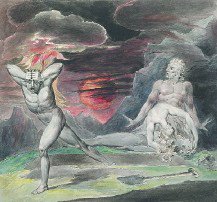
The image of a wrathful God is ancient, and certainly has Biblical roots. The word "wrath" shows up hundreds of times in scripture, and is certainly the subject of much artwork as Cain Fleeing the Wrath of God illustrates. Among my favorites is Exodus 32, where Moses talks God back from the brink of a wrathful destruction of the golden-calf worshipping people. Perhaps the most famous English-language example of wrath-of-God theology is in Jonathan Edwards' Sinners in the Hands of an Angry God. That one will send shivers down your spine.
It should come as no surprise that I don't see it this way, but it's important to acknowledge how common such theology is, even when it comes in a "kinder and gentler" version of a wrathful God who calls his (and this God is always masculine) followers to hate the sin but not the sinner. I actually prefer the old one, whose hate was right out there!
Well, no. But anyway, as is often the case, I find John Hall's work helpful here. In Why Christian?, he asks, "Do you know (most people don't, I find) that the word at the center of this whole discussion, 'salvation,' comes directly from the Latin word for 'health' -- salus? It means to be whole, to be integrated. You may think, for instance, of the way that Jesus in the Gospels, in healing someone of some debilitating illness, tells them, 'Be whole.' ... All that kind of thing lies behind the word that we too often turn into something so 'spiritual,' religious, and 'otherwordly' that it betrays the most fundamental meaning of the word itself, which is a very earthy thing: the healing of persons, the reintegrating of divided selves, the reuniting of people with those from whom they are estranged, the equipping us for the kind of life our Creator intended us to have. 'I came that they might have life and have it more abundantly.'"
Saved from what? From ourselves, I think.

Tuesday, February 07, 2006

Grace and Salvation

If you google "grace" you get about 95 million hits. If you google "salvation" you get about 20 million. I have no idea what the roughly 5 to 1 ratio of grace to salvation means.
But I was pondering these words yesterday after a couple of women came to our door peddling, I presume, salvation. I'm not certain of their pitch because I wasn't at home and my partner* was on the phone and didn't answer the door.
In any case, I'm sure most of you have, at one time or another, answered a similar knock and been asked, in one form or another, "have you been saved?"
I've seen variations on that theme become the center of debate at Presbytery meetings where the concern is not so much for the salvation of folks at the meeting -- after all, we Presbyterians are God's frozen-chosen. The question at such meetings usually arises during questions to candidates for ordination who will be asked something along the lines of "do you believe God saves all people?"
It's a trap, for universal salvation has been considered heresy according to orthodox Christian theology for roughly 1600 years. The orthodox position, crudely stated, is that Christ's death on the cross was the necessary atonement for the sins of humankind and trust/faith in that saving death is necassry to receive salvation.
Of course, as with most theological arguments, there is an orthodox tenet that undermines the orthodox position. In this case, the essential Reformed tenet of God's sovereignty. When one considers the Biblical witness that God desires communion with all of humankind on the one hand and the belief that God is sovereign -- God gets what God wants -- on the other, some form of universalism seems the logical conclusion. Don't try that on the floor of Presbytery, though, because pretty soon you'll get the Hitler question -- e.g., Do you believe Hitler was saved? Actually, Hitler is a great example, because he presumably had "accepted Jesus Christ as Lord and Savior."
Ah, salvation theology ... a sticky wicket. What do you think?


*I'm using that term just to drive a little closer to the edge all those folks out there who have had a field day speculating about my sexuality in the months since my church's stand regarding weddings was in the news.

Sunday, February 05, 2006

Happy Birthday Bonhoeffer

On the 100th anniversary of the great prophet, here are some links to Bonhoeffer including a link to a birthday reflection for seekers of peace and justice, info on a new documentary airing on PBS tomorrow, a link to the Bonhoeffer society, and the Barmen Declaration -- the statement of theological principles that guided the confessing church movement in Germany under Hitler. While Karl Barth wrote the declaration, Bonhoeffer was a central leader in the confessing church and the anniversary of his birth -- especially when it falls in a time of increasing confusion about ultimate authority and allegiance -- is a good time to reread Barmen. Happy Birthday Bonhoeffer.

Friday, February 03, 2006

What Manner of Man ... or God?

A small provocation for Friday afternoon, courtesy of Hall's Why Christian?:
What God? What is this God like? If Jesus "reveals" God, puts us in touch with God, makes God specific and particular, no longer a vague abstraction, then what sort of God do we have here? Is this a God chiefly of power and might, who is primarily concerned for "himself" and "his" own glory? Or is this a God who is out to condemn every sinner -- who, as Dorothy Sayers once wrote with characteristic irony, really hated everybody, but let his wrath fall on his beloved son instead? Or is this a legalistic, tit-for-tat sort of God, who has once and for all laid down the rules for being a "good" human being -- a moralisitic divinity who backs up the moral codes of exemplary citizens (my village!)? Or is this an internalized, gently forgiving, no-hard-feelings sort of God whose "business" as an ironic thinker of the nineteenth century said, "is to forgive"? If Jesus is for Christians the finite one through whom the Infinite is primarily glimpsed, what does that tell us, concretely, about the Infinite -- about "God"? (Hall, 25)

Monday, January 30, 2006

Why Jesus?

Theologians call it the "scandal of particularity." Why incarnation? What does it mean to call Jesus the Word made flesh? Well, before diving into the many why's, how about just a few "who's" to begin with.

Who is this One called savior and lord,

Who was from the beginning, eternal Word?

Who is this One whose birth angels would foretell?

Who is this One in whom the fullness of God was pleased to dwell?

Who is this One?

Who is this One who touched and healed?

Who is this One in whom God is revealed?

Who is this One who calls us here,

Who gathers us in from far and near?

Who is this One?

Who is this One riding in on a colt?

Who is this One, the king of kings?

Who is this One called prince of peace, the hosannas sing?

Who is this One hung on a tree,

Whose life and death and life again somehow set us free?

Who is this One?

Who is this one with a table spread,

Who offers us this daily bread,

Who pours this cup and shares this wine, and calls us out to spread the vine?

Who is this One?

Who is Jesus -- for you?

Tuesday, January 24, 2006

And another thing ...

This may be slightly off-topic, but what the heck! I just bugged out of a Presbytery meeting in which an overture from the session of the church I serve was swallowed up in parliamentary manuevering. The overture concerned removing the section (G-6.106b) in the constitution of the Presbyterian Church (U.S.A.) that stands in the way of ordaining gays and lesbians to church office.
The case for removing G-6.0106b from the Book of Order is the same today as it has been each time National Capital Presbytery has voted to seek its removal. All that is different is the final report of the Theological Task Force on Peace, Unity and Purity of the Church.
Nevertheless, no matter how many good faith efforts at relationship building we pursue, no matter how many practices of discernment we engage, no matter how many alternative means of decision making we use, there comes a time to confront this issue. G-6.0106b is a failed piece of legislation that for a decade has undermined the peace, unity and purity of the church.
The whole church was watching today as this Presbytery, which has for a long time made plain its desire to see a church whose hospitality, grace, love and justice are as wide and as deep as God's. Alas, the clarity of that desire was blurred by a vote that endorsed the Task Force's report and only provisionally endorsed removing G-6.0106b.
I believe that, as Dr. King said, the arc of the moral universe is long but it bends toward justice. I trust God's grace, and pray that it will work its way with us to further the peace, unity and purity of the church we serve.
What has this to do with scripture? Well, nothing and everything, as it is, of course, the narrow interpretation of a handful of verses that holds together the house of cards that is homophobia. If that suggest of rank bigotry is too strong, perhaps it would be better to call it a house of cards of heterosexual privilege. I live in that house -- and I use the resources of scripture to tear it down.

Monday, January 23, 2006

Why Scripture?

One of the watch words of Luther's Reformation was sola scriptura, or "by scripture alone." For Luther and for those inheritors of the Reformed tradition, scripture was to be understood as the "sole sufficient rule of conduct and belief for the Christian," as Peter Gomes puts it in The Good Book.
But what are we to make of the collection of texts we know as the Bible? After all, writing centuries before the advent of historical criticism, John Calvin himself wrote, "We know that the Evangelists were not very exact as to the order of dates or even in detailing minutely everything Christ said or did."
It is incumbent upon those of us who stand in the tradition of the Reformers to take the Bible seriously, but how do we do so in a cultural context that continuously uses scripture as a weapon in culture wars? Even more critically, how do we read a hopeful word when scripture itself has been a stumbling block to the hope of faith for so many modern readers? One of my favorite Old Testament scholars, Walter Brueggemann, offers a compelling point of departure in Hopeful Imagination. Commenting on the literature of the exile, he says, "we study the themes, metaphors, and dynamics which give new life to the tradition, which summon to faith in a fresh way, and which create hope for a community so deeply in crisis that it might have abandoned the entire enterprise of faith."
On the other hand, we might prefer to abandon the enterprise ourselves rather than accept the radical challenges the scripture poses. As Hall remarks in Why Christian? "It has been the happy fate of Protestantism, which insisted on the 'sole authority' of Scripture, to have to live with these writings, like it or not. Nothing has been more subversive of human 'religious' tendencies than this book, because the truth is ... that 'the Bible hates religion.'"
At which point, he quotes Amos: "I hate, I despise your feasts, and I take no delight in your solemn assemblies. Even though you offer me your burnt offerings and cereal offerings I will not accept them. ... Take away from me the noise of your songs; to the melody of your harps I will not listen. But let justice roll down like waters, and righteousness like a mighty stream."
So, as you consider your own faith and the future of the church, what role does scripture play? How has it been a help? A hindrance? A comfort? A challenge? What is its authority for you?

Thursday, January 19, 2006

But Why This Church ...

Brian's comment below is neither "simplistic" nor "naive." Rather, in noting that "the church is necessary because God's actions in Christ and in the Holy Spirit have made it so" he states a foundational truth. Foundational truths are essential, but they have the nasty habit of raising as many questions as they answer. This one begs the question of which church is necessary? In other words, what manifestation or expression of church necessarily arises out of God's actions in Christ and the Spirit? On the other hand, what manifestation or expression of church arises, instead, out of needs for human security, out of human fear, out of cultural expectation, and out of theologies or Christologies shaped and informed by such fear, insecurity and cultural expectation? How can we tell the difference?

Tuesday, January 17, 2006

What Church?


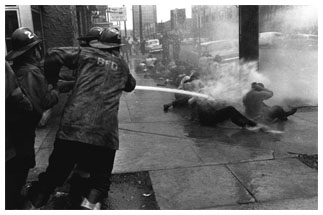
The first comment from yesterday's post raises the next question: what is the church? Our Reformed confessional heritage can be both gift and burden for all such questions, but on this one it does offer much to consider. I believe it is the Scots Confession that says the marks of the true church are that the word of God is rightly proclaimed and the sacraments are rightly administered. I can't help a day-after-King-Day provocation: perhaps the fire hoses of Birmingham were baptism, the lunch counter sit-ins were the Lord's Supper, and "I have a dream" was the word proclaimed.
In addition to the marks of the church, he constitution of the Presbyterian Church (U.S.A.) names certain purposes or ends of the church. Among them is "exhibiting the kingdom of God to the world." The Beloved Community is one compelling image of that kingdom.
Of course there are many ways to be the church and few will ever be called to look much like the Civil Rights Movement, but, as Martin Luther suggested, a church that "gives nothing, costs nothing and suffers nothing is worth nothing." Radical generosity, costly grace and redemptive suffering may just be additional "marks of the church."
Nevertheless, no matter what vision pertains -- whether conservative or progressive, Reformed or Roman, movement or institution -- the present moment demands that we think seriously about the question: is the church necessary? Why? Why not? What do you think? How does your own experience with church shape your response?

Monday, January 16, 2006

Why Church?

When I began this blog in November of 2004 I posted an e-mail from a friend who was asking, essentially, "why bother with church at all?" Martin Luther King Day is a perfect opportunity to grapple again with that essential question.
Why consider the necessity of the church on King Day? After all, King was often extremely critical of the church. In his Letter from the Brimingham Jail King wrote that "the judgement of God is upon the church as never before. If the church of today does not recapture the sacrificial spirit of the early church, it will lose its authentic ring, forfeit the loyalty of millions, and be dismissed as an errelevent social club with no meaning for the twentieth century. I am meeting young people every day whose disappointment with the church has risen to outright disgust."
On the other hand, I have always suspected that the Civil Rights Movement, at its best moments, was, precisely, the church at its best. King suggested as much in ending his famous letter when he prophesied that "One day the South will recognize its real heroes. ... They will be the young high school and college students, young ministers of the gospel and a host of their elders courageously and nonviolently sitting-in at lunch counters and willingly going to jail for conscience's sake. One day the South will know that when these disinherited children of God sat down at lunch counters they were in reality standing up for the best in the American dream and the most sacred values in our Judeo-Christian heritage" -- in other words, they were being the church.
Indeed, as Douglas John Hall notes in Why Christian?, "The first Christians were not thinking in institutional terms at all, they were thinking in terms of a movement" (page 127). Of course, as both the early church and the Civil Rights movment learned, if any movement is to be sustained over time various institutional forms become necessary. The movement gave birth to, among other institutions, the NAACP, the Congress on Racial Equality, the Southern Christian Leadership Conference, and the Student Nonviolent Coordinating Committee. The first Christians, and all of the rest of us for 2,000 years, have built, reformed, reshaped and rebuilt the church in thousands of institutional incarnations.
This King Day comparison is not without incongruencies, of course. The Civil Rights movement was not an entirely faith-based enterprise. It did not requiring creedal statements or confessions, (although it issued manifestos, including many of King's speeches, that are confessional statements). Nevertheless, I think it is a useful comparison because it can help us ask central questions about the church: in what way is it a movement? to the extent that it is a movement, toward what is it moving? what institutional forms, liturgies and traditions serve the direction of the movement? which ones distract from that direction?
Ultimately, these questions help refine our approach to the central question my friend's e-mail raised: is the church necessary and, putting my own, self-interested cards on the table, why does it remain necessary?

Friday, January 06, 2006

New Year

The new year might be time for some good reading. Especially since, as a form of self-punishment masquerading as "professional responsibility," I am trying to make it through the first book of the Left Behind series. Sack cloth and ashes would be easier. Forty days of fasting would be more pleasureable. But if I could break the fast with something from David James Duncan it might make the whole thing go down a bit easier. Duncan wrote one of my favorite novels, The Brothers K. It sits on my bedside table and I pick it up now and then just to enjoy the way he uses words. He tells stories of faith better than just about anyone I know, and obviously it gets him in a bit of trouble now and then, as this passage suggests:
AFTER THREE DECADES OF INTIMACY with some of the world's greatest
wisdom texts and some of the West's most beautiful rivers, I assumed I'd
escaped the orbit of organized religion. Then came a night in
Medford, Oregon. After giving a literary reading to a warm,
not-at-all-church-like crowd, I was walking to the car when one of the
most astute men I know -- my good friend, Sam Alvord -- clapped me on
the back and amiably remarked: "I enjoy your evangelism."
I was flabbergasted. Evangelism? I was a story-teller, not one of
those dang proselytizers! The evangelists I'd known since childhood
thought the supposed "inerrancy of the Bible" magically neutralized
their own flaming errancy and gave them an apostolic right to judge
humanity and bilk it at the same time. The evangelists I'd known
proclaimed themselves saved, the rest of us damned, and swore
that only by shouting "John 3:16! John 3:16!" at others, as if
selling Redemption Peanuts at a ball game, could we avoid an Eternal
State of Ouch.
Then honest Sam tells me: "I enjoy your evangelism"?
Shit O. Deer.

That's pretty much the way I felt the first time somebody suggested to me that I might be
well-suited for ministry.

Sunday, December 25, 2005

Christmas Peace

Never forget that we are called first to be makers of peace. As senseless, endless war rages in Iraq, the Christmas Truce of World War I should give us pause to remember that soldiers do not make wars, generals do. This is a story worth remembering. John McCutcheon wrote a beautiful folk song that tells the story. You can listen to the story and a bit of the song through the Public Radio Exchange. Search "Christmas in the Trenches." Perhaps some troops in Iraq may experience such a moment of peace this year, although the only peace for some is the eternal quiet of the grave.

Saturday, December 24, 2005

A Hoax, and a Ho, Ho, Ho

The story about the Dartmouth student turns out to be a hoax. It was, in many ways, a classic "urban legend." It reflects the fears of our times, that mount with each new revelation about domestic spying. That fear, felt with a particular closeness here in the DC area, certainly made me more than willing to believe the story.
But that's a subject for another day. For now, enjoy this little silliness -- a gift from the world wide web. Merry Christmas, and Happy New Year.

Wednesday, December 21, 2005

Merry Christmas, Big Brother

The story from Dartmouth , of a student being questioned by government agents after he requested a copy of Mao's "Little Red Book" from the library, leaves me wondering just how little one has to do these days to get the national security state's mockers in a twist. Could one simply blog on such words as Marx, communism, terrorism, assassination, 9-11, Bush, peace, redistribution, protest, poverty, war, or Israel? Is that enough to draw down the attention of those who are apparently watching our words? I'm reasonably certain I've used every one of those words in sermons before. Perhaps I'd better stop posting sermons on the church's web site.
Heaven forbid we should organize a congregational witness for peace. We might wind up like those poor Quakers in Florida. I'll think twice this Christmas Eve before making any mention of the Prince of Peace. And that e-mail I sent to Virginia's U.S. Senators about investigating this domestic spying ... on second thought maybe I should try to call that one back.
My high school son is reading Marx's Revolution and Counter Revolution -- just for fun! OK, he's an interesting child. Thank goodness he got that book from the pastor's study and not from the public library.

Tuesday, December 20, 2005

All I Want for Christmas ...

All I want for Christmas is a version of Spybot that can tell me when I am under surveillance by the national security state. How about you?

Friday, December 16, 2005

Sleepwalking Through Advent

Advent is the season of watching and waiting. It is a season of hopeful expectation. It is a season of preparation. As the paper fills with news of torture and domestic spying it is tempting to roll over and go back to sleep.

But, above all, this is a season of and for wakefulness.

Of course we know that wakefulness is not always easy. We want to turn away from what is difficult. We want the solace of sleep. This is nothing new under the sun.

Jesus’ disciples turned away from the terror in the Garden of Gethsemane and they fell asleep. Their sleep did not stop the crucifixion. Nor did it stop the resurrection. Their sleep did not stop the radical reorientation of life that is the gospel, and, of course, neither will ours. As the psalmist says, “In peace I will both lay myself down and sleep, for you, Yahweh alone, make me live in safety.” When the terror is too much, when the valley of the shadow is too deep, God promises to be with us, and keep watch over us as flocks in the night.

Nevertheless, we are called to wakefulness. Even now, in the midst of a season of great darkness; especially now when such a season cries out desperately for light and more light. For advent means coming, and we are called to be awake to what is being born in our very midst.

And what is that, or, more to the point, who is that begin born here and now among us?

It is the one who calls us to awake; the one whose coming radically reorients all of life, even our definitions of what is lowly, what is weak, what is broken.

As Bonhoeffer put it, “Where the understanding is outraged, where human nature rebels, where our piety keeps a nervous distance: there, precisely there, God loves to be; there [God] baffles the wisdom of the wise; there [God] vexes our nature, our religious instincts. There [God] wants to be. … God in lowliness – that is the revolutionary, the passionate word of Advent.”[1]


[1] Dietrich Bonhoeffer, The Mystery of Holy Night (New York: Crossroad, 1997) 8.